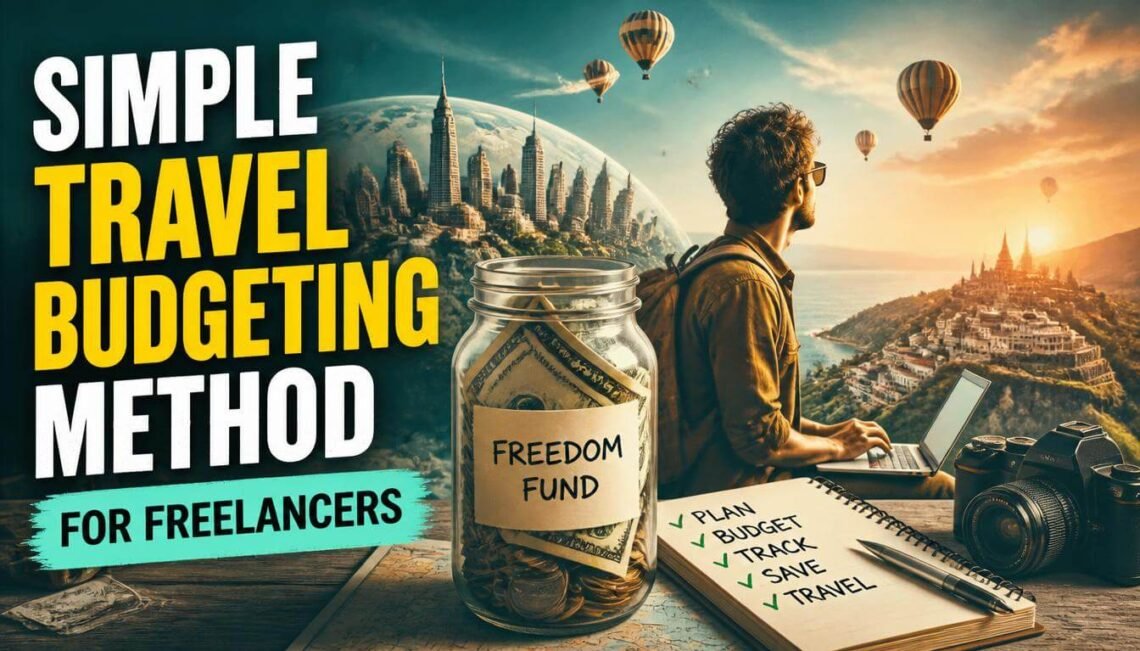
Finding a simple travel budgeting method for freelancers with irregular income felt nearly impossible until I stopped trying to plan around a salary I never had. My bank account swings wildly between feast and famine months. Yet last year I visited Portugal, Mexico, and Thailand without going into debt once. The trick is not earning more. It is budgeting differently.
Calculate Your True Monthly Baseline First
Most budgeting advice tells you to average your last twelve months of income and divide by twelve. That sounds logical until you realize your worst month might be a third of your best month. I made that mistake early on and ended up overdrafting my checking account in February because I had budgeted like July was the norm. The math looked great on paper but fell apart the second a client delayed payment by three weeks and my “average” turned out to be a complete fiction.
What actually works is finding your floor number, the lowest amount you earned in any single month over the past year. That is your real baseline. Every dollar above that floor is variable money you can allocate to travel, savings, or taxes. When you budget from the floor up instead of the average down, you stop setting yourself up for panic every time a client pays late or a project falls through. Open your bank statements right now and find that number. It might sting, but it is the most honest starting point you will get. Ignore the months where everything went perfectly and focus on the ones where nothing did.

Build a Rolling Travel Fund Using the Percentage Rule
Once you know your floor, the next move is setting up a separate high-yield savings account specifically for travel. This step is the backbone of any simple travel budgeting method for freelancers with irregular income because it physically separates your travel money from your survival money. I use Ally Bank because the interest rate is decent and the interface does not make me want to throw my phone across the room. Every time a client payment hits your account, immediately transfer a fixed percentage to that travel fund before you touch anything else. Automate it if your bank allows automatic transfers triggered by deposits, because willpower is a finite resource and I do not trust mine after 9 PM.
I started at 10 percent and bumped it to 15 percent during my high-earning quarters. The key word here is percentage, not a flat dollar amount. When you pull in $8,000 one month, 15 percent is $1,200 going straight to travel. When you pull in $2,500 the next month, it is $375. The ratio stays fair to your actual cash flow. This rolling approach means your travel fund grows in direct proportion to what you earn, and you never accidentally starve your rent budget to feed your wanderlust.

A Simple Travel Budgeting Method for Freelancers With Irregular Income
Here is where everything clicks into place. The actual method is a three-bucket system I stumbled into after my second overdraft fee of 2022. Bucket one covers your floor expenses: rent, insurance, groceries, internet, the stuff that keeps you alive and working. Bucket two is your tax and emergency reserve, which should get at least 25 percent of every invoice because the IRS does not care that your income is unpredictable. Bucket three is everything else, and this is where travel lives alongside your personal fun money and any gear upgrades you have been eyeing.
The reason this simple travel budgeting method for freelancers with irregular income actually sticks is that it removes the guilt. You already funded your obligations and your tax bill before you even look at bucket three. So when you book a $400 flight to Lisbon using bucket three money, you are not robbing your future self. You are spending money that was explicitly earmarked for this exact purpose. IMO, that psychological shift matters more than any spreadsheet trick or budgeting app you could download.

Time Your Bookings Around Your High-Income Months
Freelance income tends to follow patterns once you pay attention for a year or two. For me, March through May and September through November are consistently strong. January and July are usually brutal. Knowing this rhythm changed how I book travel completely. I stopped trying to be spontaneous and started treating my income calendar like a weather forecast for my wallet.
I now purchase flights and lock in accommodation during my peak earning months when my travel bucket is overflowing. I use Google Flights with the price tracking feature turned on about three months before I want to leave. When the alert fires and my bucket three balance is healthy, I buy immediately. This means I am never scrambling to find cheap last-minute deals during a dry spell. The trip is already paid for. By the time I actually board the plane, the money left my account months ago and I barely notice the absence. Planning around your income calendar instead of the regular calendar is the whole game.
Track Every Trip Expense in Real Time on the Road
Budgeting before the trip is only half the battle. The real damage happens when you are standing in a night market in Chiang Mai at midnight and suddenly your daily food budget has vanished into pad thai and mango sticky rice. I have been there more times than I want to admit, and the hangover is financial, not alcoholic.
I use the Trail Wallet app on my phone to log every single expense the moment it happens. Street food, tuk-tuk rides, museum tickets, that overpriced coffee at the airport, all of it goes in within thirty seconds of the purchase. I set a daily limit based on my total trip budget divided by the number of days, and I check the running total every evening over a cheap local beer. If I overspend on Tuesday, I eat cheaper on Wednesday. No drama, no spreadsheet anxiety, just a quick glance at a number on my screen. Real-time tracking keeps small splurges from snowballing into a credit card bill that ruins your entire next quarter.
Create a Buffer for the Inevitable Dry Spell
No matter how carefully you plan, there will be a month where two clients ghost you simultaneously and your income drops to almost nothing. I hit this wall last October and was grateful I had built a two-month buffer into my travel fund earlier that spring. The alternative would have been canceling a trip I had been looking forward to for months, and I refuse to let a bad quarter dictate my life like that anymore.
The buffer is simple. Once your travel fund reaches the total cost of your next planned trip, keep contributing until you have an extra 30 to 40 percent sitting on top. That cushion absorbs the shock when income dips and prevents you from raiding your travel savings to cover rent or groceries. Think of it as travel insurance for your travel fund. It sounds redundant until the dry spell hits and you realize your Lisbon trip is still fully funded even though your freelance income just got cut in half. That peace of mind is worth every extra dollar you squirreled away during the good months.

FAQs
How much should a freelancer save each month for travel?
There is no universal number because your income fluctuates month to month. Start with 10 percent of every invoice and adjust based on your travel goals. If you want two international trips a year, you might need 15 to 20 percent during high months. The percentage approach keeps things proportional and realistic no matter what your latest payment looks like.
Can I use this simple travel budgeting method for freelancers with irregular income if I am brand new?
Absolutely, but your floor number will be lower and less predictable in the first year. Track every dollar you earn for at least six months before setting a firm baseline. You can still use the three-bucket system right away. Just keep your travel bucket modest until your income pattern becomes clearer and more reliable.
What apps work best for tracking travel spending on the road?
Trail Wallet is my top pick because it is dead simple and works offline. Splitwise is great if you are splitting costs with travel buddies. For a more detailed breakdown, Wallet by BudgetBakers syncs with your bank and categorizes expenses automatically. Pick one and stick with it rather than juggling three apps you will abandon by day four.
Should I pause travel savings during a slow month?
Yes, and that is exactly why the percentage method works so well. If your income drops to your floor, your 10 or 15 percent contribution shrinks naturally without you having to make a stressful decision. You are still technically saving, just less. Do not pull from your travel fund to cover baseline expenses. That defeats the entire purpose.
How do I handle currency exchange and foreign transaction fees?
Get a credit card with zero foreign transaction fees before you leave. The Charles Schwab debit card reimburses all ATM fees worldwide, which saved me roughly $80 on my Thailand trip alone. Always pay in the local currency at card terminals and never let the machine convert for you. That sneaky conversion markup adds up fast.
Conclusion
Traveling as a freelancer does not require a trust fund or a lucky streak of high-paying clients. It requires a system that bends with your income instead of breaking every time a payment arrives late. What is the first trip you would book if your travel fund was already full?