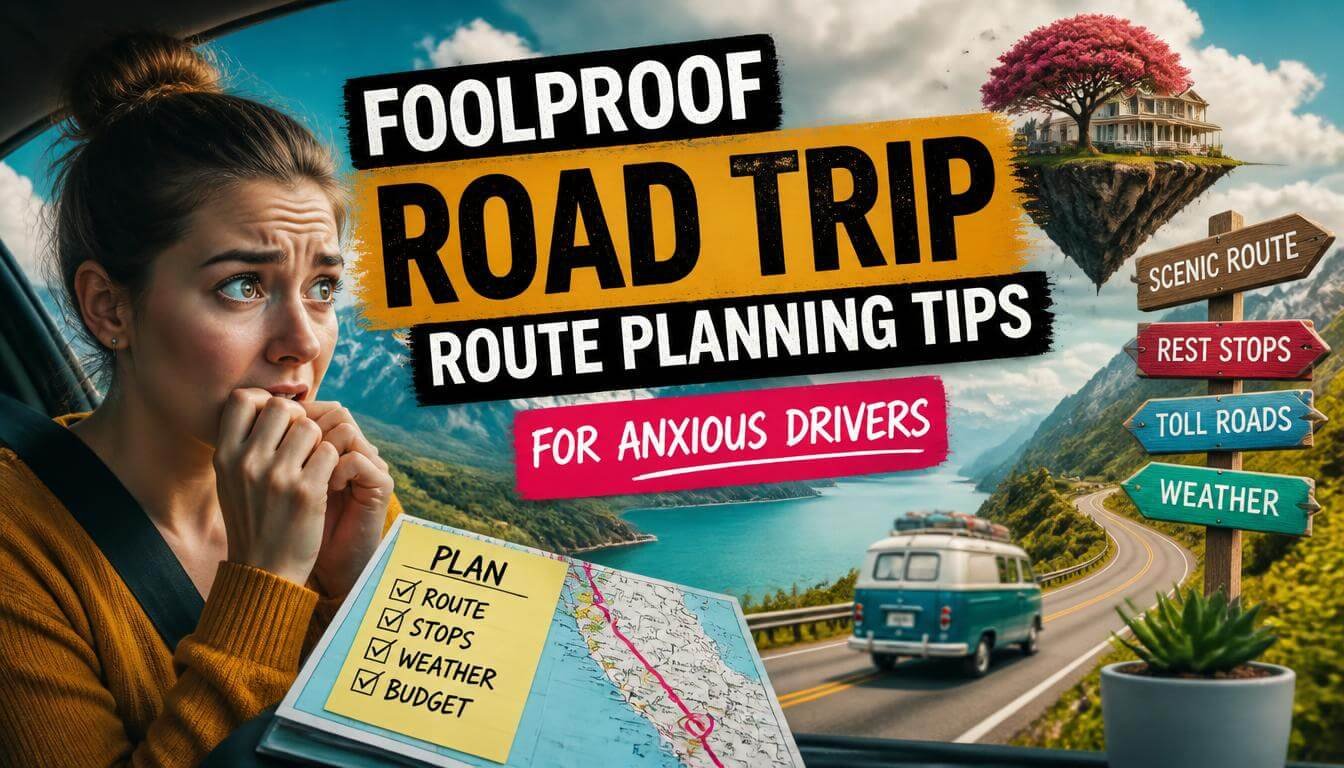
Finding foolproof road trip route planning tips for anxious drivers saved my sanity when scary highway driving kept me isolated at home. My chest used to tighten whenever GPS redirected me toward a chaotic five lane highway merger. You do not have to live in fear of unknown exits or sudden construction detours. Planning ahead with the right strategy turns terrifying journeys into comforting weekend adventures.
Phase One: Foolproof Road Trip Route Planning Tips for Anxious Drivers
Anxiety thrives on the unknown, so your first line of defense is taking away the element of surprise. Before you ever pull out of your driveway, open Google Maps on a desktop computer and switch to the satellite and Street View modes. Zoom in on the major interchanges where you know you will have to merge or switch highways. Seeing the exact physical layout of an exit ramp, including the road signs and lane markings, builds immense confidence. When you arrive at that actual interchange hours later, your brain registers it as familiar territory rather than a sudden, high-speed puzzle.
I always spend ten minutes examining the parking lot of my final destination too. Knowing whether I will have to parallel park on a busy main street or if there is an easy, spacious parking lot around back saves me from that awful, circular driving panic. This simple habit of establishing visual familiarity with your route keeps your heart rate low and your mind focused on the road.

Time Your Departure to Avoid Commuter Chokepoints
Merging into bumper-to-bumper traffic while trying to read highway signs is a recipe for an immediate panic attack. You can easily sidestep this nightmare by scheduling your driving windows during historical traffic valleys. Use the “depart at” tool on your computer’s mapping software to analyze how traffic behaves along your path at different times of the day. Leaving your house at 9:30 AM instead of 7:30 AM can mean the difference between a peaceful cruise and a grueling fight through suburban commuter gridlock.
If your route takes you near a major metropolitan area, plan to pass through that city during its midday lull or late in the evening. I personally prefer driving during the early morning hours just as the sun rises because the roads are practically empty and the light is clear. Avoiding peak traffic hours reduces your split-second decision-making requirements, allowing you to drive at a relaxed pace in the right-hand lane.
Identify Safe Havens Along Your Path
Driving long distances becomes far less intimidating when you know a safe place to pull over is always just a few miles away. Never set out on a journey hoping that a clean, quiet rest area will magically appear when you need it. Use tools like the iExit app to identify large travel plazas, visitor centers, and familiar roadside businesses before your trip begins. Knowing exactly where you can stop to catch your breath, use a clean restroom, or buy a cold drink gives you a mental safety net.
I map out a potential rest stop for every ninety minutes of driving time. Even if I do not feel anxious when I pass a planned stop, knowing it was there keeps my nervous system from entering a state of high alert. This is one of those foolproof road trip route planning tips for anxious drivers that turns a looming marathon into a series of short, highly manageable micro-trips.

Adjust Your GPS Settings for Peace of Mind
Standard navigation apps are programmed to find the absolute fastest route, even if that route saves only two minutes by routing you through a chaotic, high-stress interchange. You must take control of your technology rather than letting it dictate your stress levels. Go into your app settings and toggle the avoid highways option or turn off toll roads to see what alternative pathways exist. Quite often, a scenic state route runs parallel to the interstate, offering lower speed limits and beautiful scenery.
Scenic roads let you drive at a comfortable pace without tailgaters aggressively pushing you from behind. If you must use the interstate, turn off the automatic rerouting feature so your GPS does not suddenly throw you onto an unfamiliar side street to bypass minor construction. Staying on a predictable path is worth a few extra minutes of travel time, FYI.
Establish Ground Rules with Your Passengers
Having a passenger in the front seat can be an incredible asset, but an unhelpful passenger can amplify your driving anxiety tenfold. Before you turn the key in the ignition, set clear boundaries and establish a helpful co-pilot protocol with everyone in the vehicle. Explain that you need them to handle the navigation duties, manage the music playlist, and look out for upcoming exits well in advance.
Ask your co-pilot to give you a calm warning two miles before any highway change, which gives you plenty of time to move into the correct lane without rushing. Make it clear that sudden gasps, backseat driving commentary, or loud phone calls are strictly off-limits. When your passenger understands their role as a supportive navigator, you can focus entirely on keeping your eyes on the road and your hands relaxed on the wheel.

Create an Analog Backup for Your Route
Relying solely on a smartphone screen is a massive gamble that often leads to panic when you lose cell reception in rural areas or mountain passes. Having your map screen go blank while you are driving at high speeds is enough to terrify even the most seasoned driver. Prevent this nightmare scenario by printing out a physical map or writing down key route instructions on a notepad in your center console.
Writing down your route is a classic example of how foolproof road trip route planning tips for anxious drivers keep you in control. This analog backup should list major highway transitions, exit numbers, and key landmarks in large, easy-to-read handwriting. If your phone battery dies or your signal drops, you can look down at your notepad and know exactly which highway you need to follow.
Conquer Destination Parking Anxiety in Advance
For many people, the actual driving is only half the battle, whereas finding a place to park at the destination causes the real dread. Looking for parking in a crowded downtown area while cars honk behind you is incredibly stressful. You can easily eliminate this worry by researching parking garages, public lots, or street parking regulations before you arrive.
Use satellite imagery to locate dedicated parking structures near your destination that offer easy entry and exit points. I gladly pay extra to park in a quiet garage a few blocks away from my venue rather than battling for a tight street parallel parking space. Knowing exactly where your car will rest takes away the final hurdle of your trip, allowing you to enjoy your arrival with a clear, calm mind.

Perform a Pre-Trip Vehicle Inspection
A sneaky source of driving anxiety is the quiet fear that your car might break down or experience a flat tire in an unfamiliar place. You can silence this background noise by performing a quick, thorough inspection of your vehicle a day or two before your departure. Check your tire pressure, verify that your headlights and turn signals work, and top off your windshield washer fluid.
Knowing your car is in excellent mechanical shape removes one of the most common subconscious triggers of road trip anxiety. If you are not comfortable checking these things yourself, take your vehicle to a trusted local mechanic for a quick fluid check and tire rotation. This simple errand pays massive dividends in peace of mind when you are cruising down the highway miles away from home.
Frequently Asked Questions
Do these road trip planning tips for anxious drivers work for long interstate travel?
Yes, they are especially crucial for long interstate travel. Breaking a multi-day journey into small, manageable chunks of two-hour blocks makes the distance feel less overwhelming. Knowing where you will sleep and park each night eliminates the late-night search panic that triggers anxiety.
What is the best GPS app for nervous highway drivers?
Google Maps remains the most reliable option because of its detailed lane guidance and Street View integration. Waze is great for real-time hazard alerts, but its constant rerouting can feel frantic. Stick with Google Maps and preview your lanes before starting your engine.
How often should an anxious driver pull over to rest?
Plan to stop every ninety minutes or one hundred miles. Regular breaks prevent physical tension from turning into mental fatigue. Use these quick stops to stretch your legs, drink some water, and reset your nervous system before tackling the next stretch of highway.
What should I do if I have a panic attack while driving?
Pull over safely at the very next exit or designated rest area immediately. Turn on your hazard lights, roll down the window for fresh air, and practice deep diaphragmatic breathing. Remind yourself that the feeling is temporary and you are entirely in control of your vehicle.
Conclusion
Taking control of your journey before you put your keys in the ignition changes the entire driving experience. With a solid plan in place, those intimidating highway lanes become nothing more than simple paths leading to your next great memory. What is your favorite trick for staying calm when driving on long trips?